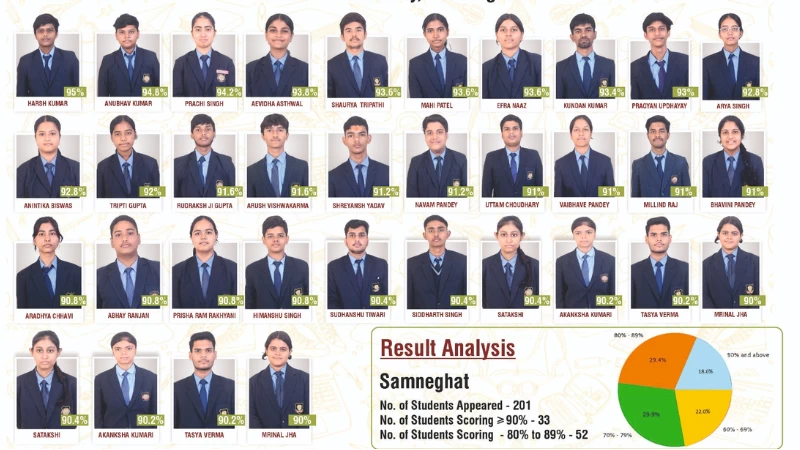
Scoring 90% or above in the CBSE Class 12 Board Exams is a dream for many students. While it may seem challenging, the right study strategy, regular practice, and smart time management can make it achievable. Success in the board exams is not about studying for long hours but about studying consistently and focusing on the right topics.
At Sunbeam Academy, we believe that every student can perform well with proper guidance, disciplined preparation, and confidence. In this guide, we'll share a practical subject-wise study plan for CBSE Class 12 Board Exams 2026-27, along with preparation tips that can help students maximize their scores.
Understand the CBSE Class 12 Exam Pattern First
Before starting your preparation, it is important to understand how the CBSE board exam is structured. Most Class 12 subjects include:
- Theory examination
- Internal assessment or practical examination
- Competency-based questions
- Short and long answer questions
- Case-based questions
Knowing the exam pattern helps students prepare according to the marking scheme and avoid unnecessary stress during the exams.
Subject-Wise Study Plan for CBSE Class 12 Board Exams
Physics Study Plan
Physics requires both conceptual understanding and regular numerical practice.
Focus More On
- Electrostatics
- Current Electricity
- Magnetism
- Electromagnetic Induction
- Optics
- Modern Physics
Preparation Tips
- Understand concepts before solving problems.
- Practice numerical questions every day.
- Learn important derivations step by step.
- Draw neat and properly labelled diagrams.
- Solve previous years' CBSE board papers regularly.
Regular practice improves speed and accuracy, which are essential during the final examination.
Chemistry Study Plan
Chemistry is one of the highest-scoring subjects when prepared systematically.
Focus More On
Physical Chemistry
- Solutions
- Electrochemistry
- Chemical Kinetics
Inorganic Chemistry
- Coordination Compounds
- d and f Block Elements
- p Block Elements
Organic Chemistry
- Named Reactions
- Organic Conversions
- Reaction Mechanisms
Preparation Tips
- Read NCERT thoroughly.
- Prepare formula sheets for Physical Chemistry.
- Revise important reactions every week.
- Practice balancing chemical equations and conversions.
- Solve NCERT examples and previous year questions.
Many board examination questions are directly based on NCERT concepts.
Biology Study Plan
Biology is largely theory-based and rewards students who revise regularly.
Important Units
- Genetics and Evolution
- Human Reproduction
- Biotechnology
- Ecology
- Biology and Human Welfare
Preparation Tips
- Read every line of the NCERT textbook carefully.
- Practice drawing labelled diagrams.
- Revise scientific terms regularly.
- Learn important biological processes with flowcharts.
- Practice genetics questions every day.
Well-presented answers with diagrams often help students score higher marks.
Mathematics Study Plan
Mathematics requires continuous practice and concept clarity.
High Priority Chapters
- Calculus
- Integrals
- Differential Equations
- Matrices
- Determinants
- Vectors
- Three-Dimensional Geometry
- Probability
Preparation Tips
- Practice solving questions daily.
- Memorize important formulas.
- Focus on stepwise solutions.
- Attempt mock tests regularly.
- Analyze mistakes after every practice paper.
Consistent practice helps improve speed and confidence.
English Study Plan
English is often underestimated but can significantly improve the overall percentage.
Focus Areas
- Reading Comprehension
- Writing Skills
- Literature
- Grammar and Vocabulary
Preparation Tips
- Learn the format of notice writing, letters, articles, and reports.
- Read all prescribed chapters carefully.
- Practice unseen passages.
- Write answers in clear and simple language.
- Manage time effectively during the examination.
Good presentation and proper answer structure can help students score excellent marks.
Smart Study Tips to Score Above 90%
Follow NCERT First
NCERT textbooks should be your primary study material. Once you complete NCERT, you can use reference books for additional practice.
Solve Previous Year Question Papers
Previous year papers help students understand:
- Frequently asked questions
- Question patterns
- Difficulty level
- Time management
Practicing these papers also boosts confidence before the examination.
Make a Practical Study Timetable
Divide your daily schedule between:
- Learning new topics
- Revision
- Practice papers
- Short breaks
Following a timetable consistently is much more effective than studying for long hours without planning.
Revise Regularly
Revision is the key to remembering concepts.
Try to revise every subject multiple times before the board examination.
Short notes, mind maps, flashcards, and formula sheets can make revision much easier.
Improve Answer Presentation
Board exam evaluators appreciate answers that are:
- Neatly written
- Properly structured
- Supported with diagrams
- Highlighted with important keywords
Good presentation often creates a positive impression and may help students score better.
Common Mistakes Students Should Avoid
Many students lose marks because of small mistakes rather than lack of knowledge.
Avoid these common errors:
- Ignoring NCERT textbooks
- Skipping revision
- Not solving sample papers
- Studying only before exams
- Poor time management
- Leaving difficult chapters for the end
- Untidy handwriting
- Forgetting to label diagrams
Avoiding these mistakes can improve your final score significantly.
How Sunbeam Academy Helps Students Excel in CBSE Board Exams
At Sunbeam Academy, students receive continuous academic support through experienced teachers, concept-based learning, regular assessments, doubt-clearing sessions, and personalized guidance.
The school focuses on building strong fundamentals while encouraging analytical thinking, practical learning, and confidence. Students are also given regular practice tests, revision sessions, and exam-oriented preparation to help them perform their best in the CBSE Class 12 Board Examinations.
Final Preparation Tips Before the Exam
As the board examination approaches:
- Revise important formulas every day.
- Practice one sample paper daily.
- Sleep for at least seven to eight hours.
- Eat healthy food and stay hydrated.
- Stay positive and avoid unnecessary stress.
- Reach the examination center on time with all required documents.
Confidence, consistency, and smart preparation are the three keys to scoring above ninety percent.
Conclusion
Scoring 90% or above in the CBSE Class 12 Board Exams 2026-27 is possible with proper planning, regular revision, and consistent practice. Instead of studying harder, students should focus on studying smarter by following the CBSE syllabus, practicing previous year papers, and understanding concepts thoroughly.
At Sunbeam Academy, students receive the guidance, resources, and academic environment needed to achieve their goals and build a successful future. With the right preparation strategy and determination, every student can perform confidently and secure excellent board exam results.
Frequently Asked Questions (FAQs)
1. Can I score 90% in Class 12 CBSE by studying for only three months?
Yes. If you already understand the basics, three months of focused preparation, regular revision, and practice with previous year papers can help you score above ninety percent.
2. Is NCERT enough for CBSE Class 12 Board Exams?
Yes. NCERT should be your primary study material. For Mathematics and Physics, additional practice books can help improve problem-solving skills, but NCERT remains the most important resource.
3. How many hours should I study every day?
Instead of counting hours, focus on productive study. Around six to eight hours of focused preparation, along with regular revision and breaks, is generally sufficient during board exam preparation.
4. Which subject needs the most practice?
Mathematics and Physics require daily problem-solving practice, while Chemistry and Biology need regular revision. English requires consistent reading and writing practice.
5. How important are previous year question papers?
Previous year papers are extremely important because they help students understand question patterns, improve time management, and build confidence before the examination.